At a Glance
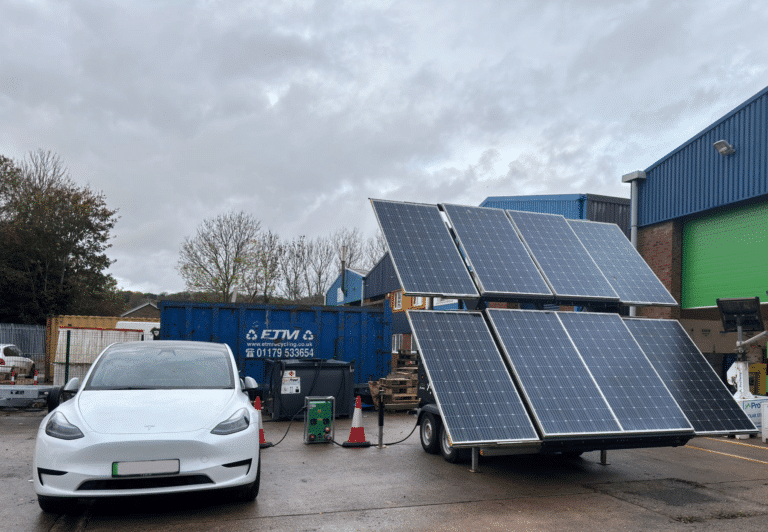
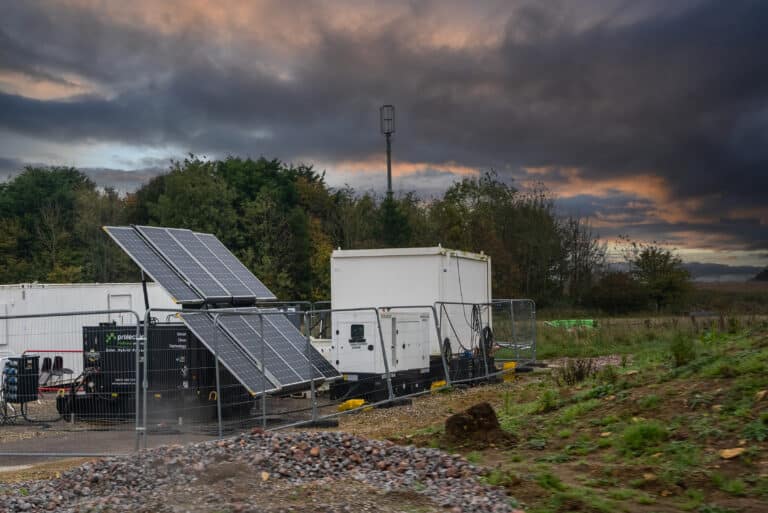
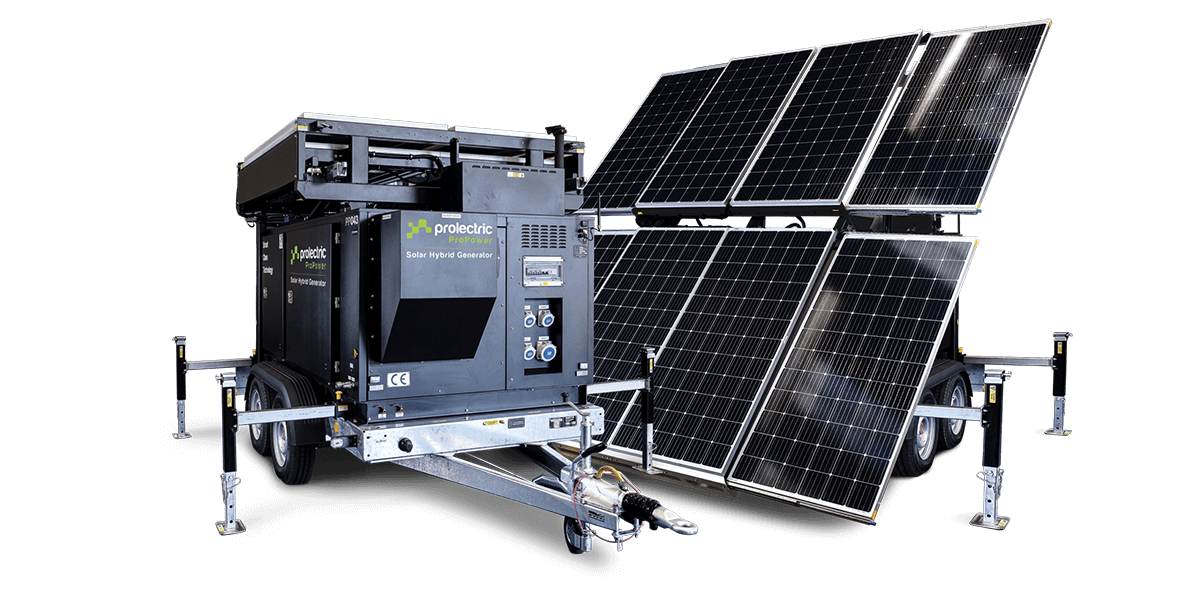
The growth of electric vehicles and plant is creating a new infrastructure challenge. Public charger expansion alone will not meet the needs of construction sites, rail possessions, highway works and other temporary or remote operations. These locations need a reliable source of charging power that can be deployed quickly, relocated and adapted as site requirements change.
Off-Grid Charging Series | Part 1 of 3
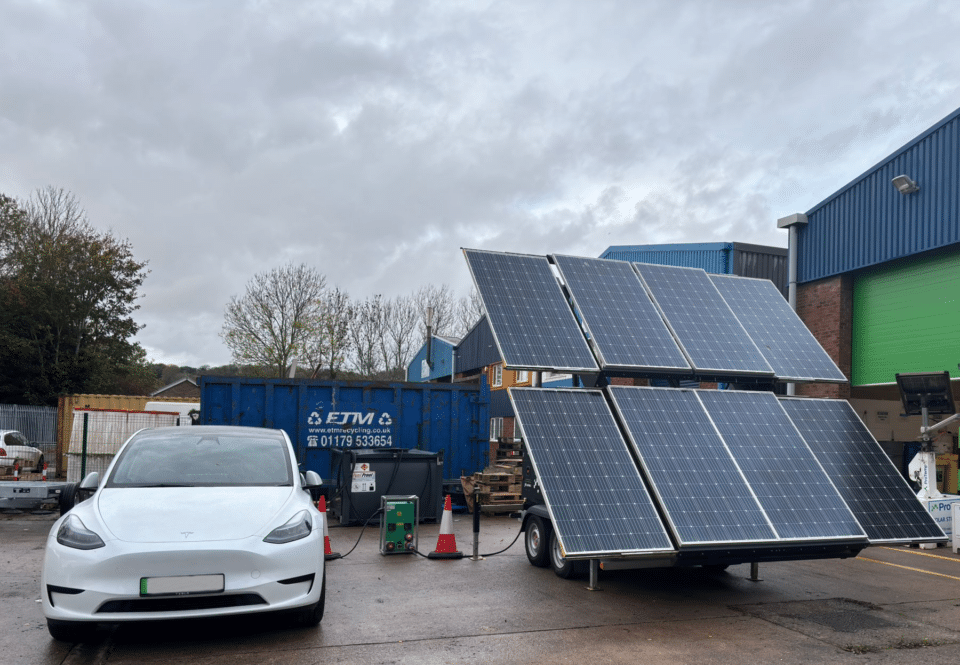
This first article explores how the growth of electric vehicles and plant is increasing demand for reliable charging power – and why temporary, remote and grid-constrained sites need a different approach.
The Future of EV Charging Infrastructure: Off-Grid, Sustainable Power Solutions
Electric vehicle adoption continues to accelerate across the UK. At the end of March 2026, there were approximately 1.86 million licensed zero-emission cars and 2.15 million zero-emission vehicles of all types. During the first quarter of 2026, zero-emission cars represented 21.8% of new car registrations, while zero-emission light goods vehicles accounted for 8.8% of new van registrations. Public charging infrastructure is also expanding, with 119,080 publicly available EV chargers recorded across the UK on 1 April 2026, including 27,372 rapid or ultra-rapid chargers.
Government policy is increasing the pressure on manufacturers, fleet operators and organisations to prepare for further electrification. From 2030, new cars powered solely by petrol or diesel will no longer be sold in the UK, although qualifying hybrid and plug-in hybrid cars may remain available until 2035. From 2035, all new cars and vans must be zero emission. The Zero Emission Vehicle Mandate sets 2026 headline targets of 33% for cars and 24% for vans, supported by trading and compliance flexibilities for manufacturers.
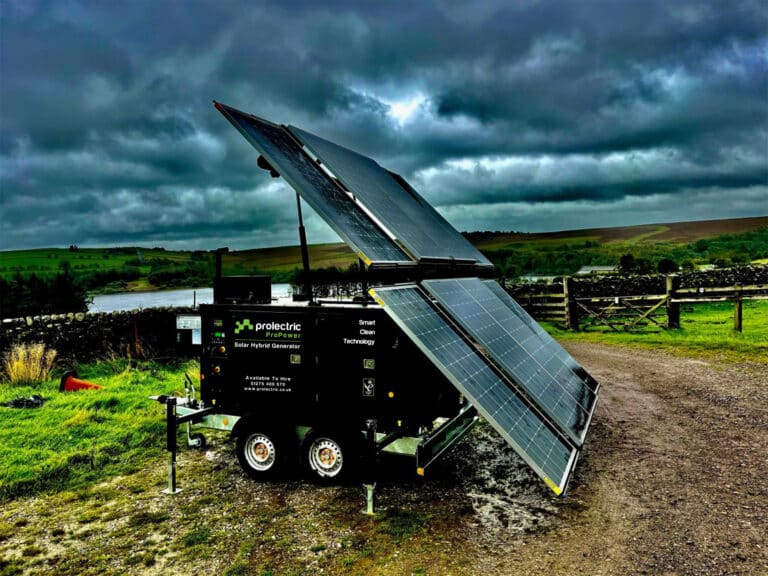
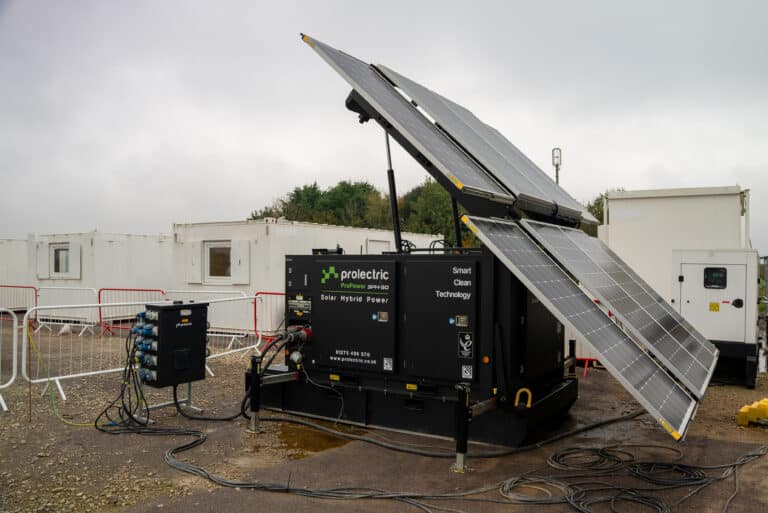
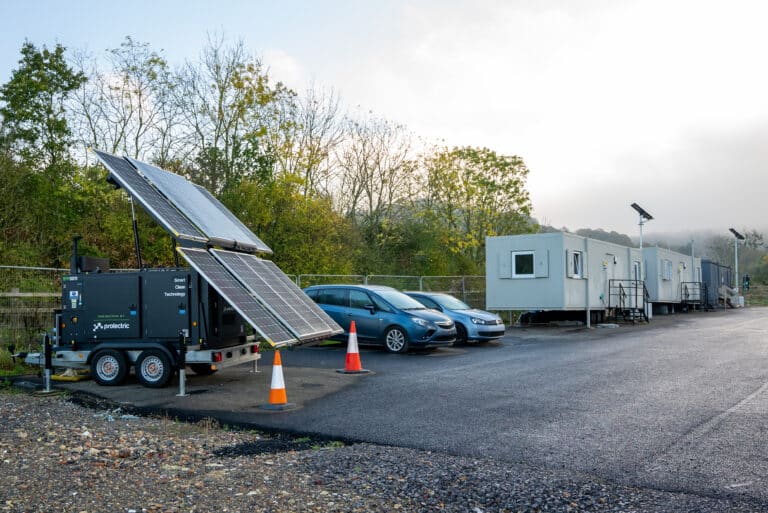
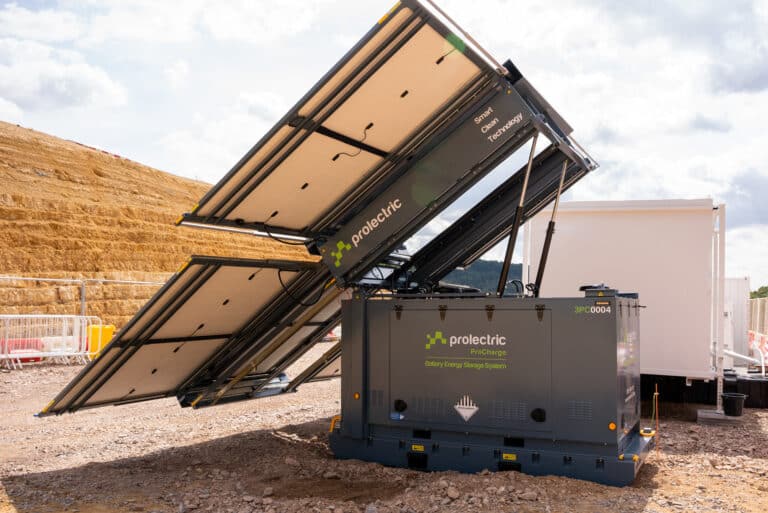
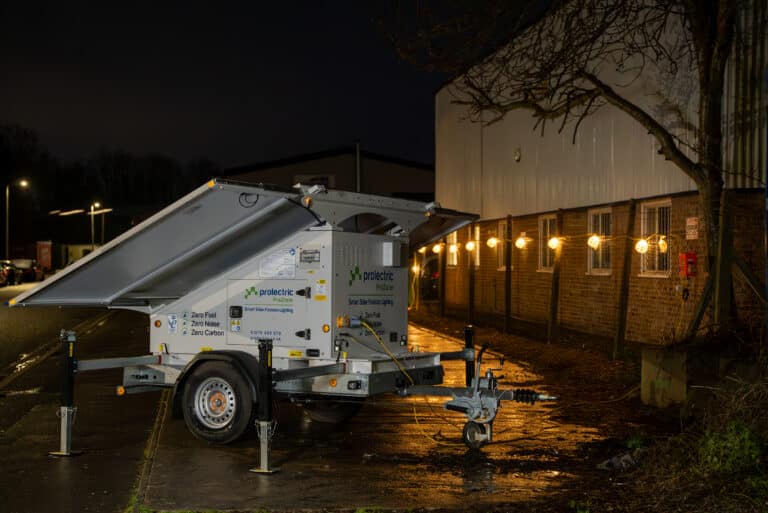
However, growth in the public charging network does not solve the charging challenge for electric plant, commercial fleets and temporary project sites. Construction compounds, rail possessions, highway works, utility projects and remote operations require dependable power at the point of use – often where the grid is unavailable, constrained or commercially unsuitable. For these applications, the critical question is not simply where a charge point can be installed but how sufficient energy can be generated, stored and delivered reliably without creating a new dependency on continuously running diesel generators.
The EV Boom and the Infrastructure Gap
The transition to electric vehicles is no longer limited to passenger cars. Electric vans are becoming more common across commercial fleets, while manufacturers are continuing to expand their ranges of electric construction plant, material-handling equipment and specialist vehicles. At the same time, corporate net zero commitments, client sustainability requirements and public-sector procurement policies are increasing the pressure on organisations to demonstrate how they will move away from diesel-powered transport and equipment.
For contractors, fleet managers and project teams, the challenge is therefore no longer simply whether electric vehicles and plant are available. It is whether sufficient charging power can be provided wherever that equipment is expected to operate.
Installing the charger is only one part of the solution. The site must also have access to enough energy to replenish vehicle batteries, enough instantaneous power to support the required charging rate and sufficient resilience to ensure priority equipment is ready when needed.
This becomes more difficult on temporary, remote and grid-constrained sites. A project may require new connection assets, transformers, cabling, trenching, traffic management and other civil works before charging can begin. The Distribution Network Operator may also need to assess whether the requested capacity can be accommodated and issue a formal connection offer.
Since April 2023, customers applying for demand connections, including EV charge points, are generally no longer required to contribute towards wider distribution-network reinforcement. They may, however, still need to pay for the electrical equipment and connection assets used specifically by their site, including cables, transformers, excavation and associated installation work. Smaller connections can sometimes be delivered within weeks but larger or more complex connections may take months or years.
For a permanent depot, this investment may form part of a long-term electrification strategy. For a construction project, rail possession, temporary compound or changing work front, the grid connection may take too long, cost too much or provide limited value once the project moves on. This creates a need for charging power that can be deployed rapidly, relocated as the site develops and adapted to changing operational requirements.
Challenges Across Industries and Sectors
Although charging requirements differ between sectors, organisations operating in temporary, remote or power-constrained environments face many of the same practical barriers.
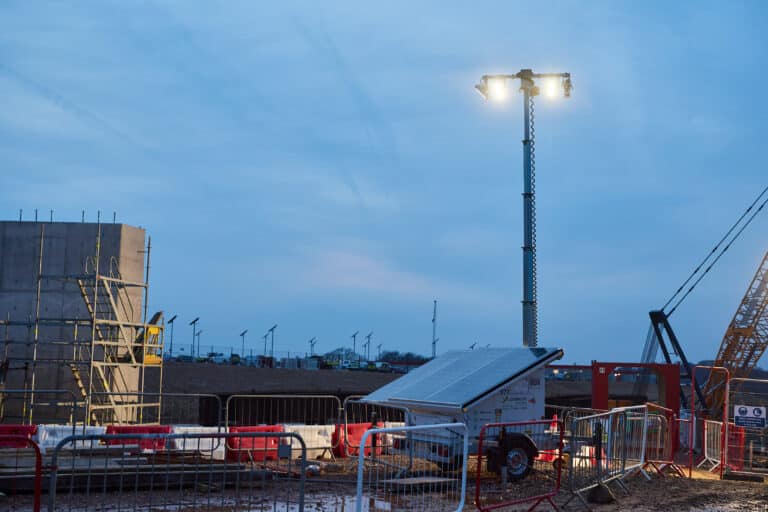
- Infrastructure and Construction: Major construction and infrastructure projects often operate from temporary compounds or work fronts with no suitable mains connection. Electric excavators, telehandlers, vans, site vehicles and staff transport may all require charging alongside welfare facilities, pumps, lighting, tools and other site loads. Site layouts also change as work progresses. Charging and power equipment may need to be relocated between compounds, lay-bys or construction phases, making fixed electrical infrastructure less practical. Charging must be planned around operational duty cycles so that electric plant remains available without delaying the programme or reducing productivity.
- Rail Projects and Possessions: Rail work frequently takes place at remote access points or during short possession windows. Equipment may operate across multiple locations and only return to a compound for a limited period. The charging system must therefore deliver enough energy during the available window and provide confidence that priority plant will be ready before the next possession begins. Where permanent infrastructure is unavailable, a mobile or temporary power source may be required close to the work location.
- Highways and Linear Infrastructure: Roadbuilding and highways projects extend across long corridors rather than operating from a single fixed location. Work fronts, compounds and temporary lay-bys can move several times during the life of the project. Installing a permanent connection at every location is unlikely to be commercially viable. A relocatable charging system can instead support electric plant, vans and site vehicles as operational priorities change.
- Utilities and Emergency Response: Utility compounds, maintenance projects and emergency-response sites may be located away from reliable grid infrastructure. These operations can also involve critical pumps, communications equipment, monitoring systems and other electrical loads that must remain operational alongside vehicle charging. Resilience is especially important in these applications. Charging demand must not prevent critical equipment from operating and a suitable reserve or backup strategy may be required.
- Fleet Depots and Logistics Hubs: Commercial fleets are introducing electric vans and other vehicles but many existing depots were not designed for the resulting electrical demand. Several vehicles returning at the end of a shift can create a substantial simultaneous load, particularly if they must all be ready again the following morning. Temporary or supplementary charging can support pilot schemes, phased vehicle introductions or depots awaiting permanent grid improvements. It can also help operators understand their real charging profile before committing to major fixed infrastructure.
- Local Authorities and Public Services: Council depots and public-service yards may need to support electric maintenance vehicles, community transport, service vans and other fleet assets. Older or rural depots can have limited electrical capacity, while operational vehicles may need guaranteed availability for essential services. A temporary or grid-assisted system can provide additional capacity during early fleet trials or while longer-term infrastructure is being planned. Suitability for larger vehicles must be assessed against their battery size, charging capability and available dwell time.
- Commercial, Industrial and Retail Sites: Warehouses, industrial estates, offices and retail locations may want to introduce workplace, fleet or visitor charging without exceeding their existing electrical capacity. In these applications, battery storage can help manage demand, supplement a constrained connection or support temporary charging while permanent infrastructure is developed. Where charge points will be accessible to the general public, the operator must also determine whether the Public Charge Point Regulations 2023 apply. These regulations can cover publicly available charge points even when charging is offered free of charge.
- Hospitality, Events and Temporary Venues: Festivals, exhibitions, outdoor attractions and temporary venues may require charging for production vehicles, electric buggies, staff transport or visitors. These sites can lack mains power altogether and may also be sensitive to generator noise, exhaust emissions and fuel movements. Charging demand should be assessed alongside the event’s wider temporary power requirements rather than treated as an isolated load.
- New Developments and Educational Campuses: New housing developments, universities and large estates may need charging before the permanent grid connection or planned infrastructure is fully available. Temporary systems can support early residents, fleet trials, overflow parking or short-term demand in locations where permanent cabling would be disruptive.
Across all these applications, the same principle applies: the charger, vehicle, power source, battery capacity, backup strategy and operating schedule must be planned as one integrated system. Simply delivering charge points to the site does not guarantee that enough energy will be available at the required time.
In Part 2, we explore how solar hybrid and battery systems can provide resilient charging where grid capacity is unavailable, delayed or constrained.

Daniel Tipper
Business Development Manager
Share


FAQs
Public chargers are designed primarily for vehicles travelling on the public road network. Construction sites and infrastructure projects need charging at the point where electric plant, vans and site vehicles operate, which may be far from public facilities or a suitable mains connection.
Site charging must also account for operational schedules, changing work fronts and other electrical loads such as welfare facilities, pumps, lighting and tools.
Installing the charger is only one part of the requirement. The site must also have enough electrical capacity to provide the required charging rate and enough energy to replenish the vehicles within their available charging windows.
A new connection may require cables, transformers, excavation, traffic management and other civil works. Larger or more complex connections can take months or years, which may be disproportionate to the duration of a temporary project.
The challenge is particularly relevant to:
- Construction and major infrastructure
- Rail projects and possessions
- Highways and linear infrastructure
- Utilities and emergency-response operations
- Fleet and logistics depots
- Local authorities and public services
- Events and temporary venues
- New developments, campuses and large estates
Although their operating requirements differ, these applications commonly need flexible charging power without relying entirely on permanent infrastructure.
A grid-constrained site has a mains connection but the available electrical capacity is insufficient to support the proposed chargers and other site loads at the same time.
Battery storage can supplement the available connection, manage peaks in demand or provide interim capacity while longer-term infrastructure is developed.
Charging requirements should be assessed during the early planning and mobilisation stages, before electric vehicles or plant arrive on site.
The charger, vehicle capability, daily energy demand, available charging window, battery capacity, backup strategy and other site loads must be considered as one integrated system. Delivering chargers without planning the power supply does not guarantee that the vehicles will be ready when required.