At a Glance
Discover why event operators are replacing diesel lighting towers with smarter solar alternatives to reduce fuel costs, eliminate refuelling, improve efficiency and deliver safer, more sustainable events.

The hidden operational costs behind temporary event lighting
From festivals and seasonal attractions to outdoor experiences and large visitor sites, temporary lighting plays a critical role in keeping events running safely.
When thousands of visitors arrive after dark, lighting is not just about visibility. It supports safe traffic movement, improves the visitor experience, helps operational teams work efficiently and ensures sites can function reliably.
For years, diesel lighting towers have been the default solution. They were familiar, easy to deploy and solved the immediate challenge of bringing power to areas without a grid connection.
But the demands placed on event operators have changed.
Today, the question is no longer:
How do we get temporary lighting on-site?
It is:
How do we deliver reliable lighting while reducing cost, improving efficiency and lowering our environmental impact?
For many event teams, this is where diesel is starting to fall short.
The jobs your event team shouldn’t still be doing in 2026
During peak event periods, experienced operational teams should be focused on delivering a safe, successful visitor experience – not spending valuable time managing temporary infrastructure.
But with traditional diesel lighting, teams are often still dealing with daily tasks such as:
- Checking fuel levels
- Arranging fuel deliveries
- Manually switching equipment on and off
- Carrying out routine inspections
- Responding to avoidable equipment issues
For a one-night event this may seem manageable. But across multi-week festivals, seasonal attractions and winter events, these small tasks quickly become a significant operational burden.
Modern temporary lighting should reduce workload, not create more of it.
The real cost of diesel lighting goes beyond fuel
When planning an event, diesel usage is often calculated based on fuel consumption alone. But the true operational cost is much wider.
A diesel lighting tower requires:
- Fuel purchasing
- Deliveries and logistics
- Refuelling labour
- Maintenance checks
- Generator servicing
- Operational monitoring
- Fuel storage considerations
For temporary events running over multiple nights or weeks, these tasks quickly become part of the daily routine. Every refuelling visit takes a member of the team away from higher-value work. Every engine running overnight adds another operating cost. Every fuel delivery adds another dependency.
At a time when event operators are already managing tight budgets and limited resources, reducing unnecessary operational tasks can have a significant impact.
Automation is changing how event sites manage lighting
One of the most overlooked challenges with traditional lighting is the impact on event teams. During live events, staff should be focused on visitor experience, safety and operations – not managing equipment.
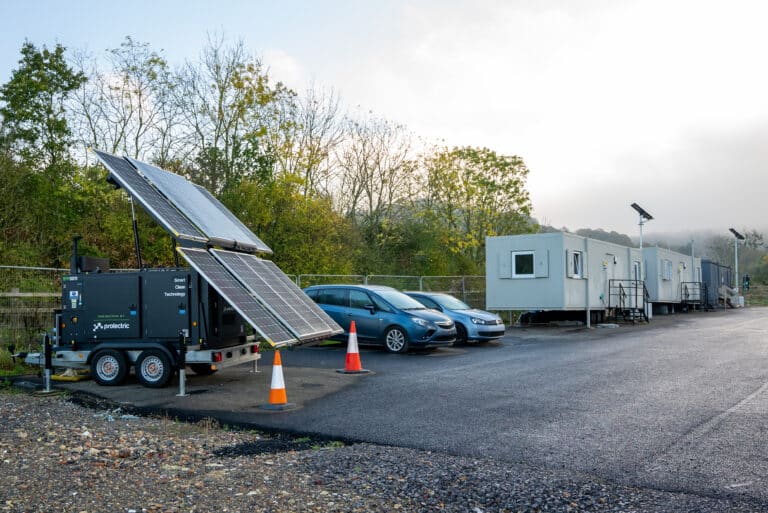
This was one of the key challenges faced by Avon Valley Adventure Park during its popular Fear Scream Park and Christmas events. The team needed reliable lighting across large visitor car parks but the existing process created additional manual work.
During fireworks displays, staff had to manually turn lighting towers off before returning afterwards to switch them back on, ensuring visitors could safely leave the site. For busy operational teams, these small tasks add up.
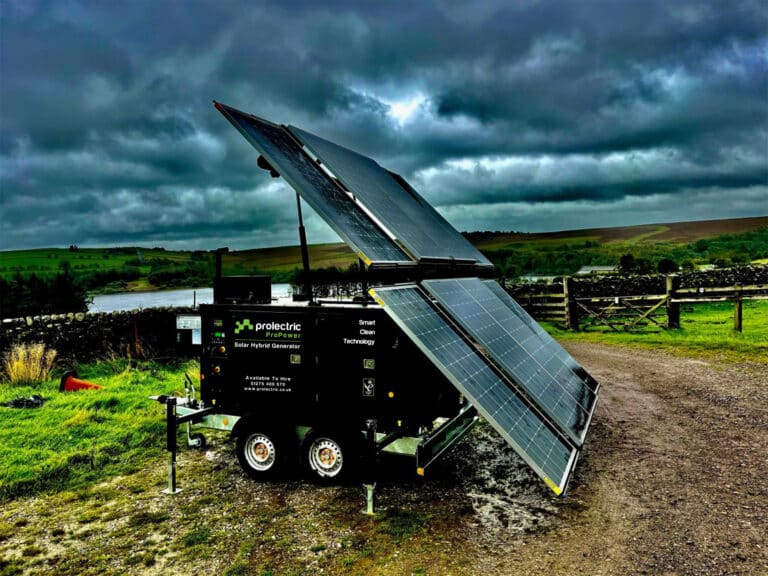
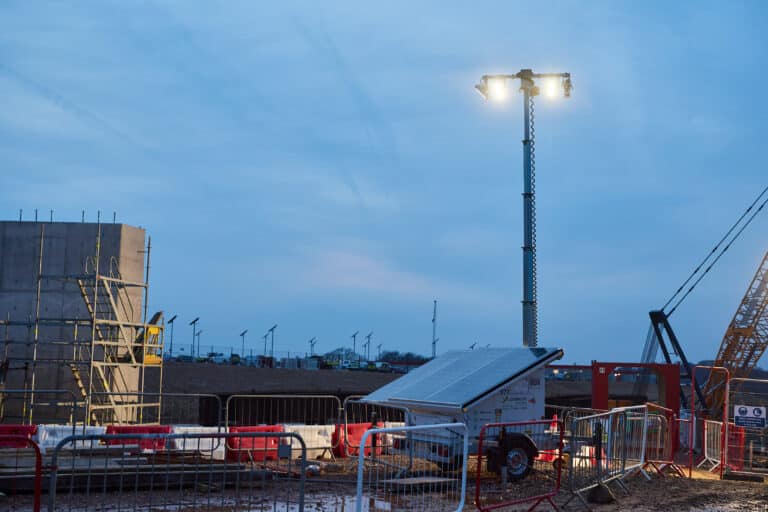
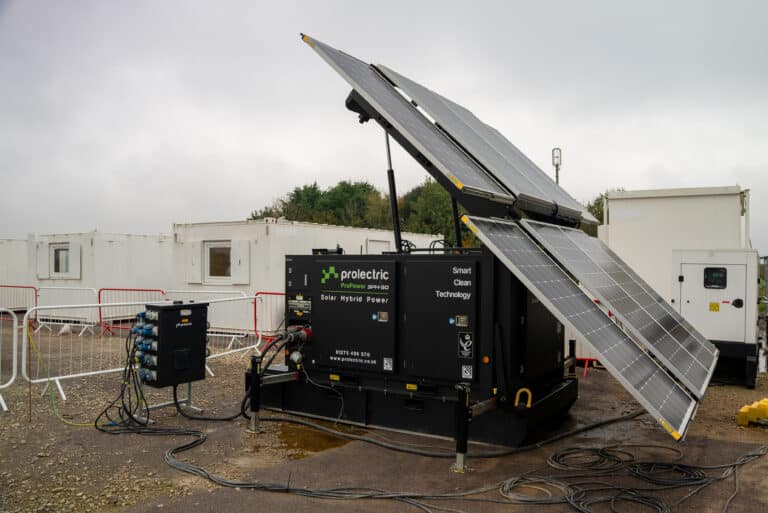
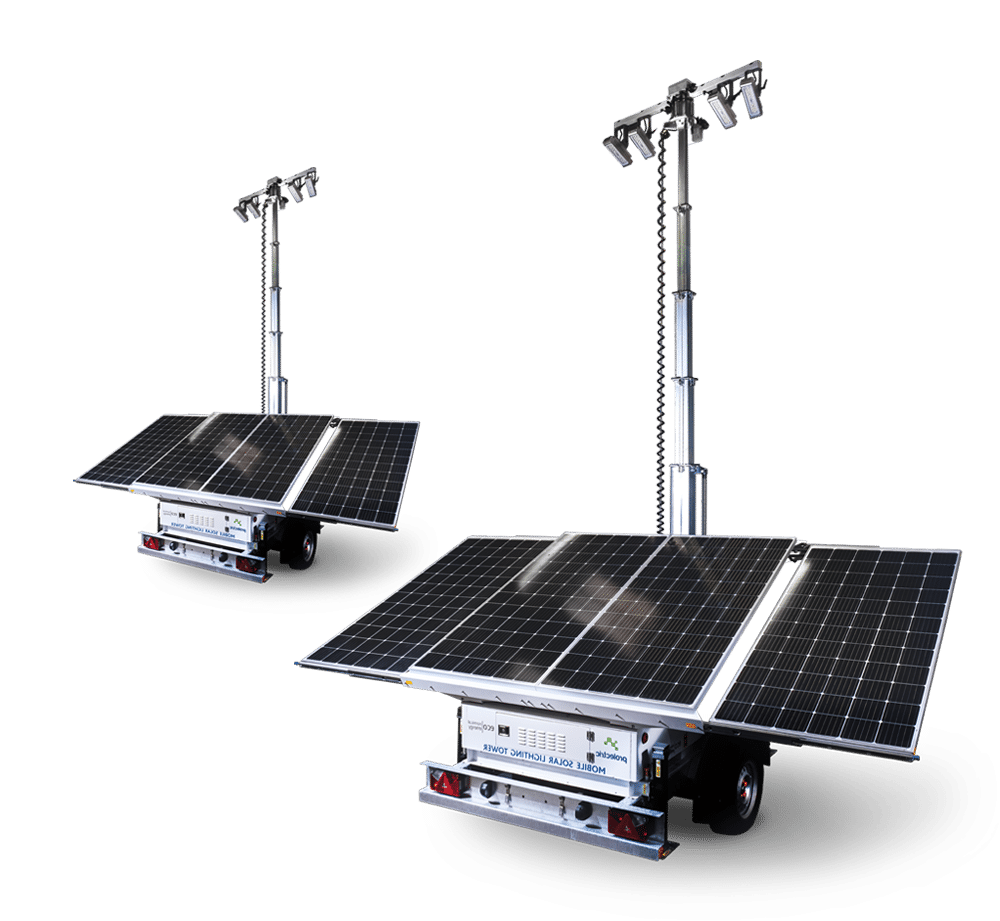
By switching to our ProRXM solar lighting towers, automated scheduling and remote monitoring removed the need for manual intervention, allowing lighting to operate exactly when required.
Prolectric’s solar lighting towers have been a game-changer for us at Avon Valley during both Fear Scream Park and our Christmas events. The remote control and automated scheduling meant the lights were on exactly when we needed them and our team weren’t tied up every night switching units on and off.
Doug Douglas
Owner, Avon Valley Adventure Park
That reduction in manual intervention is valuable but for many operators the next question is whether solar lighting can perform reliably throughout the UK event season.
But does solar lighting work during the UK event season?
For many event operators, this is the biggest question when considering alternatives to diesel.
And it is an important one.
Many major outdoor events take place during autumn and winter, when lighting demand increases and daylight hours reduce. Modern solar lighting technology is designed differently.
It is not simply relying on the sunlight generated that day.
Systems such as our ProRXM combine:
- High-efficiency solar generation
- Battery storage
- Low-energy LED technology
- Intelligent energy management
- Remote performance monitoring
This ensures lighting can continue operating reliably throughout demanding event periods, including winter conditions.
For Avon Valley Adventure Park, ProRXM solar lighting towers supported both Halloween and Christmas events, delivering reliable lighting without diesel backup.
Reducing carbon without adding complexity
Sustainability commitments are increasing across the events industry. Customers, suppliers, local authorities and stakeholders are placing greater expectations on how events are delivered.
But sustainability only works when it also makes operational sense. Replacing diesel lighting does not need to mean introducing additional complexity.
Real-World Proof: Avon Valley Adventure Park
During a five-week event period, ten ProRXM solar lighting towers helped Avon Valley Adventure Park achieve:
| £8,772 | 5,461 litres | 13,760 kg CO₂e |
| Fuel cost savings | Diesel fuel saved | Emissions avoided |
These savings were achieved without refuelling requirements, noise disruption or additional operator involvement.
Read the full Avon Valley Adventure Park case study.
A better experience for visitors and neighbours
Event lighting does more than illuminate a space. It influences the overall experience.
Diesel-powered equipment can introduce:
- Engine noise
- Fuel smells
- Vehicle movements for refuelling
- Additional disruption in visitor areas
For attractions, festivals and events operating near residential communities, reducing noise and emissions can make a noticeable difference.
Solar lighting provides silent operation, helping create a cleaner and more professional environment while maintaining safety across key areas such as:
- Car parks
- Walkways
- Entrances and exits
- Temporary infrastructure areas
Preparing for the next event season
The events industry has always adapted. From improving safety standards to enhancing visitor experiences, operators continually look for smarter ways to deliver successful events.
Temporary lighting is now part of that evolution. Diesel lighting towers solved yesterday’s challenges. But today’s events require solutions designed around efficiency, reliability, cost control and sustainability.
For operators planning their next season, reviewing temporary power and lighting requirements early creates the opportunity to reduce costs and improve operational efficiency before the first visitor arrives.
Understanding your site requirements, operating hours and lighting coverage needs can help identify where fuel use, unnecessary costs and manual processes can be removed.
Planning your next event?
Preparing your lighting strategy early can help ensure you have the right solution in place before peak season.
Discover how many solar lighting towers your event requires, where they should be positioned and how much diesel you could remove.
Request your free event lighting assessment.
Already know what you need? Request a hire quote or ask about booking a free trial.

Stacey Howarth
Business Development Executive
Share


FAQs
Yes. Our ProLight towers provide powerful illumination comparable to diesel equivalents, suitable for car parks, entrances and crowd zones.
On average our ProRXM saves 1,680 litres compared to the next most efficient diesel tower light. The ProRXM saves 100% of diesel as it is a solar only unit.
Yes – the solar system operates all year, with HVO fuel backup ensuring full lighting even during the darkest months.
The tower operates dusk-to-dawn automatically, with autonomy designed for continuous performance throughout the seasons.
By switching from a traditional diesel tower light to our ProLight Solar Lighting Tower, you will save on average 5,472 litres of fuel annually, £10,806 in operational costs and mitigate 14,665 kg of CO2e.
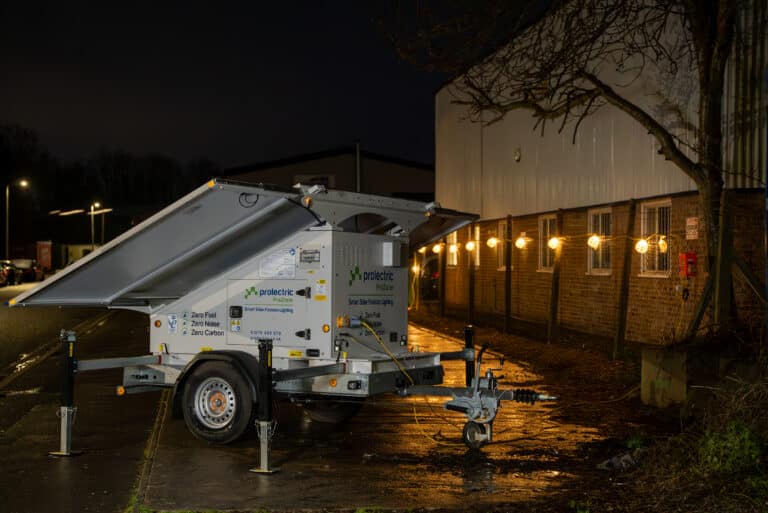
Yes. ProZone is designed specifically to eliminate diesel generators for temporary lighting, while maintaining safety, reliability and coverage.
Solar festoon lighting is commonly used for:
- Construction site walkways
- Perimeter security lighting
- Infrastructure projects
- Temporary compounds
- Outdoor events and festivals